IPC Classification: A Brief Overview
IPC (Association Connecting Electronics Industries) publishes the standards that define what "acceptable" means in electronics manufacturing. The most widely referenced is IPC-A-610, "Acceptability of Electronic Assemblies," which categorizes every solder joint, every plated through-hole barrel, every component placement into one of three classes. Choosing the right class for your product is one of the earliest and most consequential decisions you make in the product development cycle — because it determines the inspection criteria your assembler applies, the rework thresholds that stop a board from shipping, and ultimately the cost of every unit produced.
The three classes are:
- Class 1 — General Electronic Products: Consumer goods where the primary requirement is function. Cosmetic defects are acceptable. If it powers on and works, it ships. Think toys, remote controls, disposable electronics.
- Class 2 — Dedicated Service Electronic Products: Products where extended life and uninterrupted service are desired but not critical. This is the default for most industrial, commercial, and high-end consumer electronics.
- Class 3 — High Performance / Harsh Environment Electronic Products: Equipment where failure cannot be tolerated — aerospace, medical devices, military systems, automotive safety. Downtime or malfunction can cost lives.
Class 2: Dedicated Service Electronics
Class 2 is the workhorse classification for most products entering an assembly line. The governing principle is that the product must deliver reliable performance throughout its intended service life, but occasional interruptions are acceptable. Solder joints may show some non-functional imperfection — a slightly reduced toe fillet, a minor amount of dewetting (up to 5% of the joint surface) — as long as the electrical and mechanical integrity is maintained.
For through-hole barrels, Class 2 requires a minimum 50% vertical fill with solder. The annular ring — the copper pad surrounding a plated hole — may break out by up to 90 degrees (one-quarter of the pad circumference) provided the minimum lateral spacing to adjacent conductors is maintained. Solder joint voids visible on X-ray are acceptable up to 25% of the joint volume. These tolerances accommodate the natural variability of high-volume production without compromising function for the vast majority of applications.
Class 3: High Performance Electronics
Class 3 is a fundamentally different requirement profile. Every solder joint is inspected as though a life depends on it — because in many applications, it does. Through-hole barrel fill must reach 75% minimum vertical fill. The annular ring must show a full 180 degrees of unbroken copper surrounding the hole — no breakout permitted unless specifically documented and approved by the customer. Solder joint voids are capped at 15% of total joint volume. Surface cleanliness requirements are tighter, because ionic contamination that causes acceptable leakage in a consumer device can cause catastrophic dendrite growth in an avionics unit operating at altitude with condensation cycling.
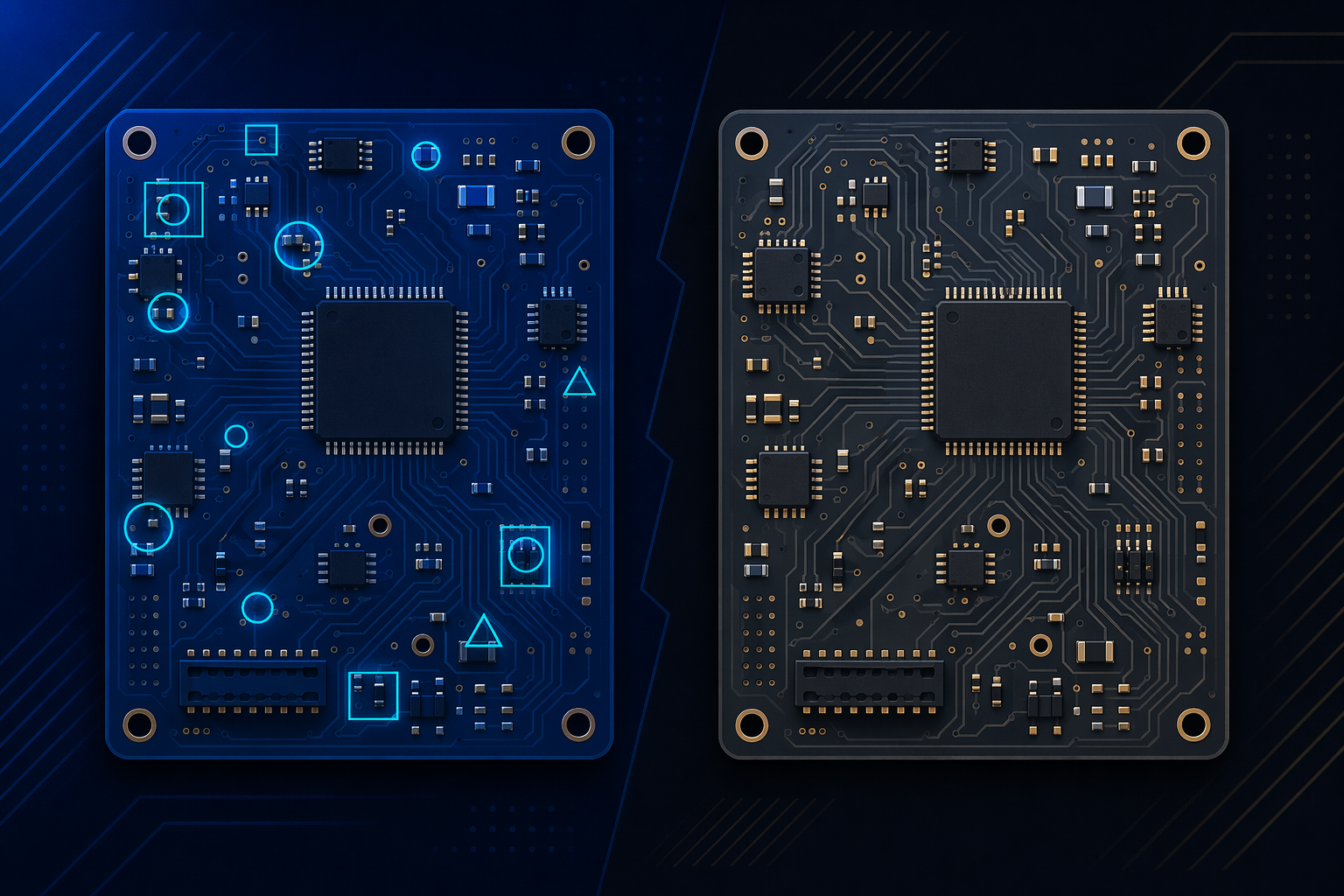
Class 2 vs Class 3: Comparison Table
The table below summarizes the key acceptance criteria differences between Class 2 and Class 3 per IPC-A-610. These are the most commonly cited thresholds in assembly specifications.
| Criterion | Class 2 | Class 3 |
|---|---|---|
| Through-Hole Barrel Fill | 50% minimum vertical fill | 75% minimum vertical fill |
| Solder Joint Voids | < 25% of joint volume | < 15% of joint volume |
| Annular Ring | 90° minimum (breakout allowed if spacing maintained) | 180° minimum (no breakout permitted without documented approval) |
| Surface Cleanliness | 1.56 µg/cm² NaCl equivalent max | 1.56 µg/cm² NaCl equivalent max; tighter post-wash verification required |
| Dewetting on Solder Joint | Up to 5% of joint surface | Not permitted; joints must exhibit complete wetting |
| Solder Bridging (unintended) | Not permitted (Class 1 allows if no functional impact) | Not permitted under any circumstances |
| Inspection Sampling | Statistical sampling acceptable per AQL | 100% inspection recommended; sampling only with documented justification |
How to Choose the Right Class for Your Product
The decision between Class 2 and Class 3 should be driven by three factors: product lifecycle expectation, reliability consequence of failure, and cost tolerance.
If your product is a consumer IoT device with a 3-year expected lifespan, where a field failure means a returned unit and a refund — Class 2 is appropriate. If your product is an infusion pump controller, a satellite power supply, or an automotive brake ECU where a field failure can injure someone or cause astronomical recall expense — Class 3 is the only defensible choice.
The cost difference between Class 2 and Class 3 is real but often overstated. The primary drivers are increased inspection time (every joint inspected vs statistical sampling), higher rework rate (more joints get rejected at tighter thresholds), and more conservative process parameters. A well-optimized SMT line with Class 3-capable equipment typically sees a 10% to 20% assembly cost premium over Class 2 — significant, but dwarfed by the cost of a single field recall. Our engineering team can walk you through the trade-offs for your specific product and recommend the classification that delivers the right balance of reliability and cost.
When in doubt, build to Class 3. You can always relax requirements later once field data supports it. You cannot retroactively tighten solder joints that shipped under a looser standard.